“Let’s make a video” is the start of the conversation, not the end. What remains is deciding which kind: animated images or filmed ones? Both have their place, but rarely for the same message.
What you want to show decides the format
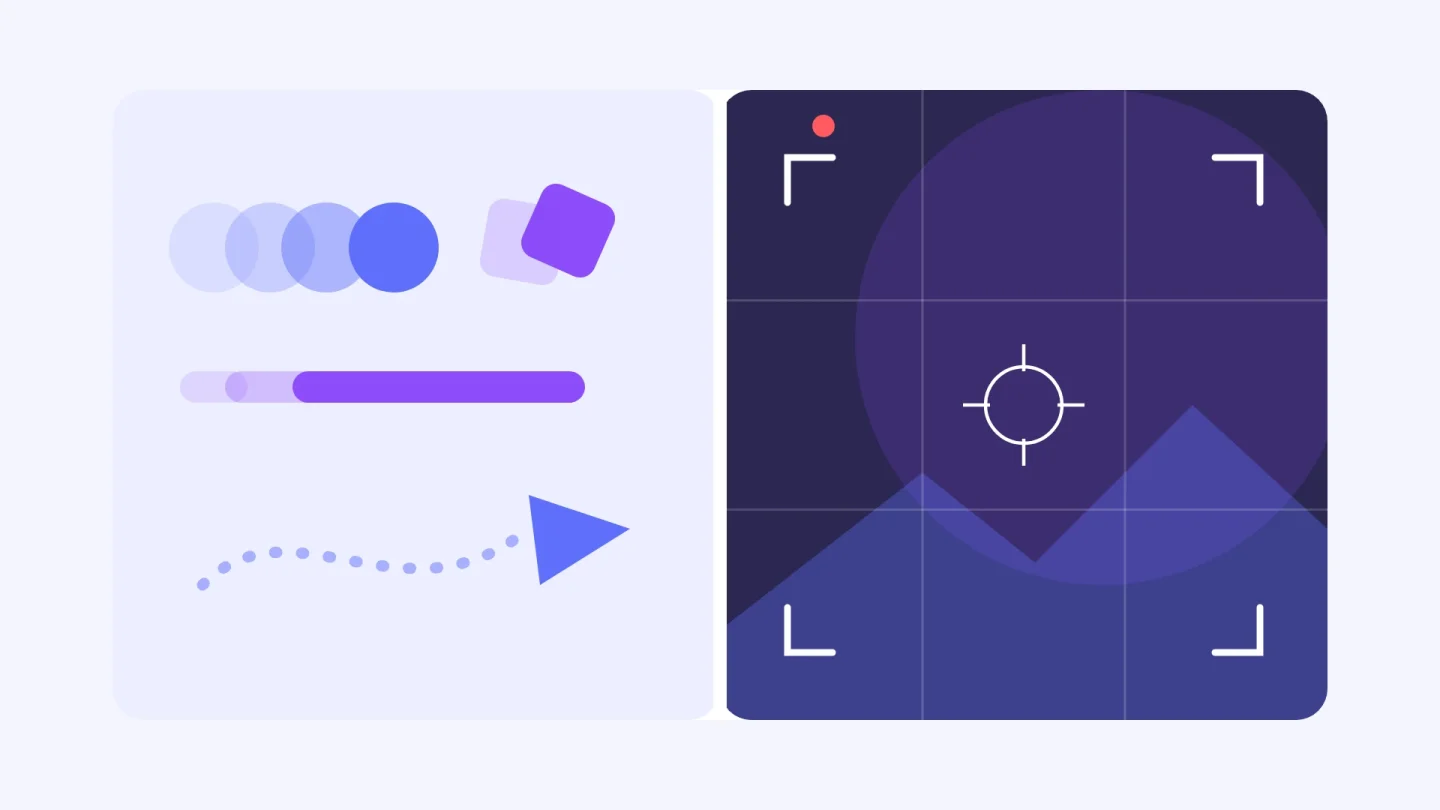
Motion design relies on animated graphic elements (shapes, text, icons). It is at ease explaining a process, an abstract concept, a figure: anything that has neither a face nor a place. Live-action video relies on real people, real places, a real camera. It is the right choice when trust, emotion or visible proof matter: a testimonial, a workshop, a product in use.
What your project requires on the production side
Filming means locations, sometimes casting, a technical crew and a schedule to keep. Motion design does without those constraints: it is prepared around a script and a storyboard, then produced without any shoot. That isn’t a difference in quality, it is a difference in logistics. If your message is ready but your team can’t free up time for a shoot, the question answers itself.
Why not combine the two
The two approaches don’t rule each other out: real footage can be dressed with animated elements to underline a figure, a step or a title. Many effective videos work this way: the real brings credibility, the animation brings clarity.
Start from your message, not from the technique: if it can be explained, motion design serves it; if it has to be proven, you film it; if it does both, you mix. If you hesitate, a few minutes of conversation is often enough to decide.
Got a video project in mind? Discover motion design or video production, or call us / message us on WhatsApp.